
A small moment with my son that made me stop and think
- Fitness Fraternity
- Jan 23
- 3 min read

I wanted to share something personal with you.
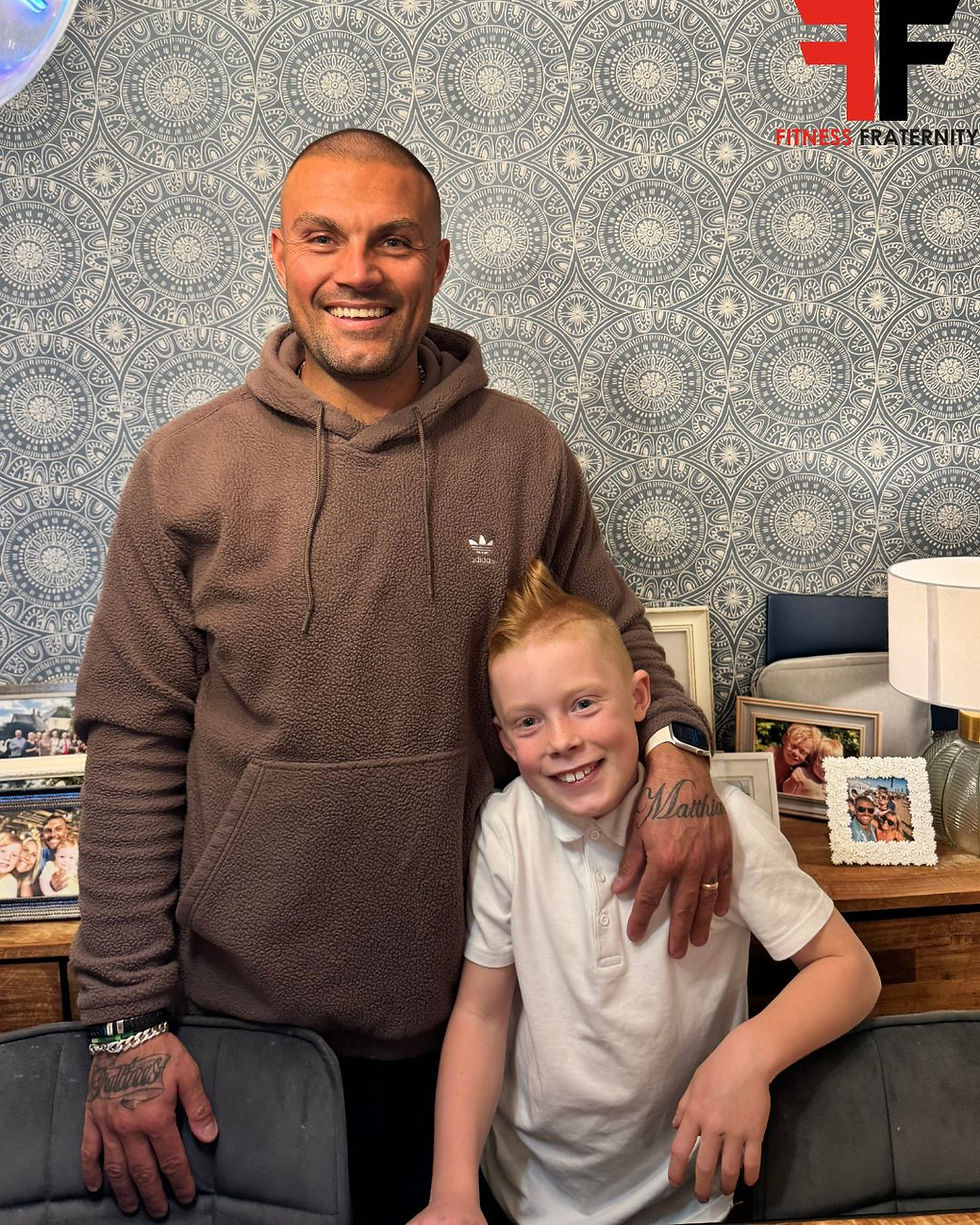
A few days ago, I changed my haircut. Back to a short back and sides buzz cut (prime Becks) after having a long man bun for 4 years. That same afternoon, within minutes of picking my eldest son up from school (8 years old), he looked at me and said he wanted a buzz cut.
No conversation. No influence. Just pure simple observation.
It made me stop and think about how much our children absorb from us, not from what we tell them, but from what we do. Our routines, our habits, our attitudes, our energy.
I wrote the piece below as a reflection for parents, myself included, on how our everyday behaviours quietly shape the people our children are becoming.
Your Children Are Always Watching
Why parental behaviour matters more than anything we say
For four years I wore my hair really long. A full on man bun. I got plenty of stick but I loved it.
Recently, I went back to what I’ve always known, a short back and sides.
That same afternoon, within five minutes of getting into the car after school pickup, my eight-year-old looked at me and said, without hesitation:
“Right, I want a new haircut. I want a buzz cut.”
There was no discussion. No persuasion. No build-up. Just observation, interpretation, action.
That small, ordinary moment says far more about parenting than most conversations ever could.
It is a reminder of a truth most parents intellectually understand, but often underestimate in daily life:
Children are watching us constantly. Not selectively. Not occasionally. Constantly.
They are watching how we speak, how we eat, how we move, how we manage stress, how we talk about our bodies, our work, our health, and our lives.
And they are learning.
Behaviour is the curriculum
Children do not primarily learn from instructions. They learn from patterns.
What we repeatedly do becomes normal to them. What we tolerate becomes acceptable. What we prioritise becomes important.
A child raised in a home where meals are cooked, movement is routine, sleep is protected, and effort is valued will internalise those behaviours as baseline life standards.
Equally, a child raised in an environment of chronic stress, inactivity, emotional reactivity, and poor self-care absorbs those signals just as deeply.
Not because parents intend harm but because example is the most powerful teacher.
The quiet transmission of habits
There is a compounding effect to behaviour that is rarely visible in the short term but profound over years:
“Watch your thoughts, they become words;
watch your words, they become actions;
watch your actions, they become habits;
watch your habits, they become character;
watch your character, for it becomes your destiny.”
This progression does not skip generations.
The way parents think aloud becomes the language children use internally.
The way parents manage discomfort becomes the child’s coping strategy.
The way parents treat their bodies becomes the child’s reference point for self-respect.
These are not isolated moments.
They are systems being installed daily.
Health is taught implicitly, not explicitly
Children notice:
Whether food is prepared or merely consumed
Whether movement is scheduled or avoided
Whether exercise is framed as punishment or privilege
Whether rest is respected or neglected
Whether stress is processed or suppressed
They notice tone, urgency, consistency.
A parent who lives movement does not need to sell it.A parent who models balance does not need to lecture about it.
Health becomes a lifestyle, not a rule.
The responsibility of introspection
Parenting is not just about guiding a child. It is about regularly examining oneself.
Not with guilt.Not with perfectionism. But with honesty.
Asking:
What behaviours am I normalising?
What relationship to food, movement, stress, and self-worth am I demonstrating?
If my child copied me exactly, would I be comfortable with the outcome?
These questions are uncomfortable and necessary.
More life, not more pressure
This is not a call for rigid control or unrealistic standards.
It is a call for more life:
More home-cooked meals
More daily movement
More positive self-talk
More time outdoors
More presence
More intentional living
Children do not need perfect parents. They need engaged, self-aware adults who understand that their everyday choices quietly shape the future.
Your child will most likely not remember every conversation you had with them.
But they will remember how life felt in your presence.
And much of that feeling is created not by what we say but by how we live.
I hope this blog finds you well, and you take something from it.
Best,
Jack Stokle
(a stressed Dad of 2 boys)


Comments